
Guide
Why Your Garage Door Jumped the Track
Plano homes built 1973-2015 carry track hardware sized for that era's doors. Here's what actually knocks a door off track and what our moderate-heat climate does to it.
Local detail
Checking It Yourself
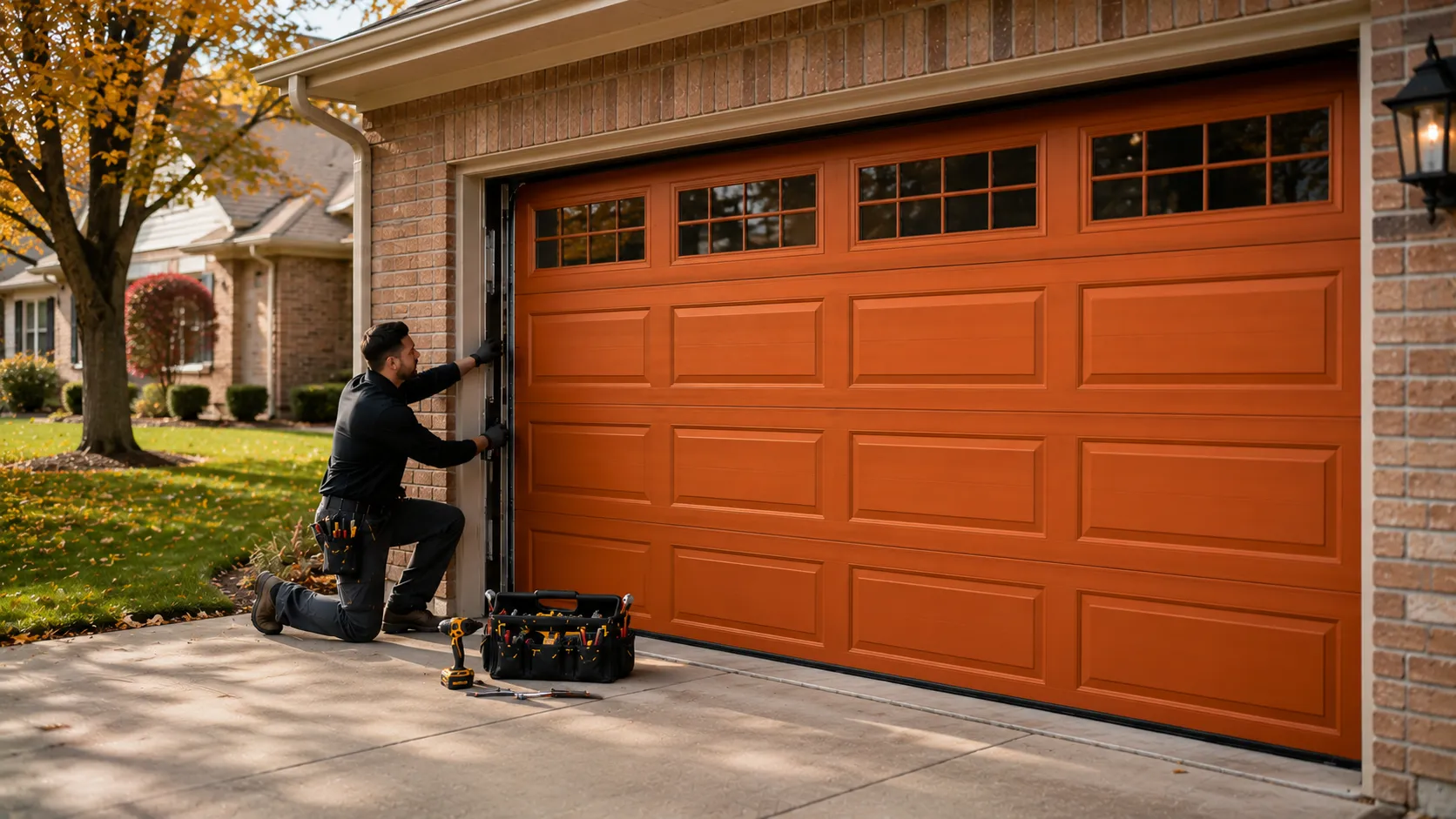
Before you call anyone, look at three things. First, stand at the side of the door and sight down the vertical track - if it bows away from the wall more than about a quarter inch, that's your problem right there. Second, check the brackets bolting the track to the framing; on a lot of Plano houses built in the 1970s and 80s these are original hardware, and after 40-plus years the lag bolts work loose in the wood. Third, run the door by hand (opener disconnected) and feel for a hitch at the same spot every time - that's usually a bent section, not a random slip.
If your house falls into the newer end of our area's stock, built in the 2000s, the tracks are probably fine and the issue is more likely a roller or a bracket that was never quite torqued right from the builder. Either way, don't force the door past a jump - running an opener against a track that's already bowed bends it worse and can pull the bracket clean out of the framing. That's the one thing we ask people not to do before we get there.
The area
What Is Going On
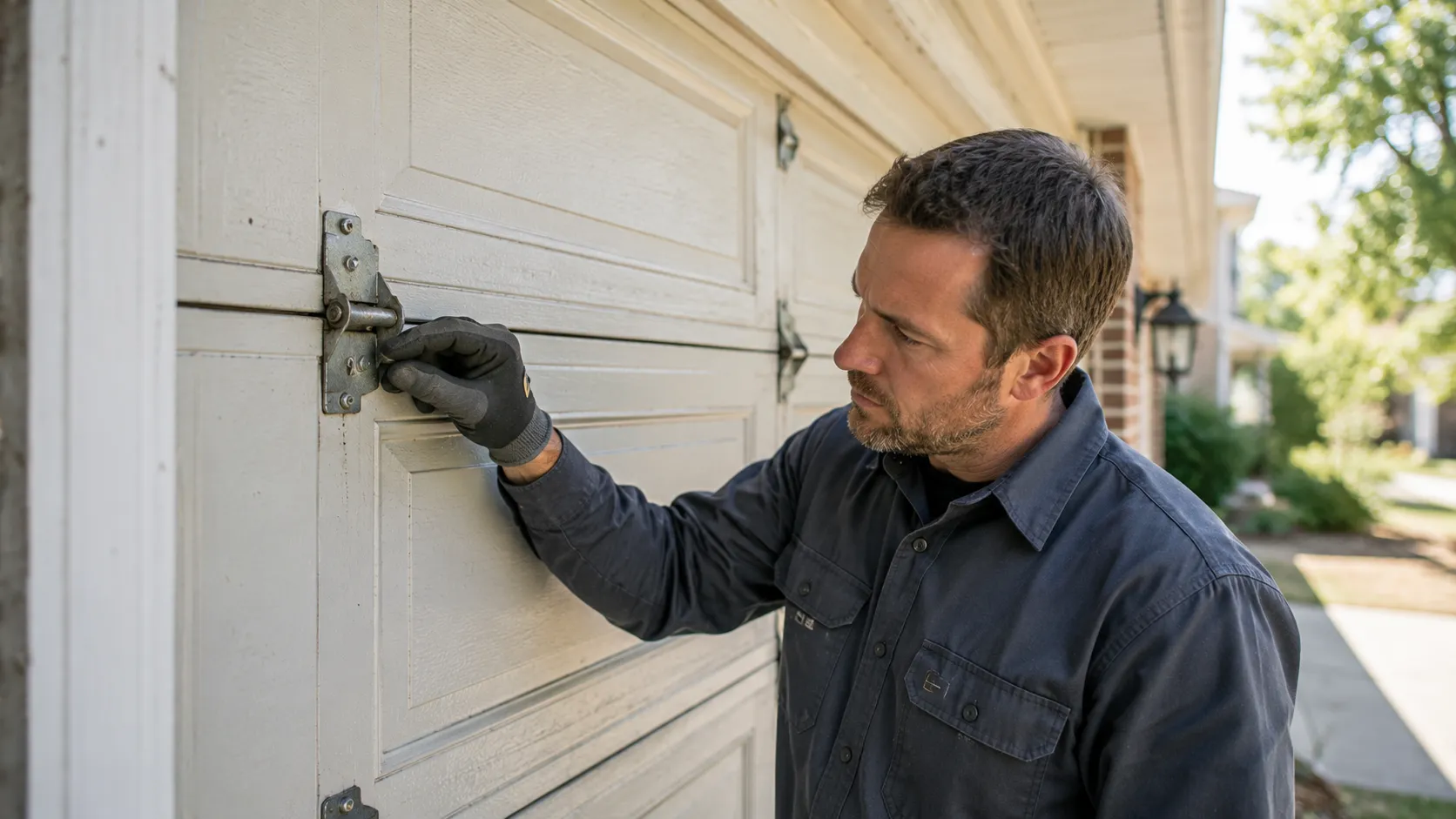
A garage door doesn't wander off track on its own. Something pushes it there: a roller that's worn down to the point it rattles in the channel instead of rolling smooth, a cable that's frayed and let one side of the door drop lower than the other, or a bracket that's backed out of the framing and let the track drift. Across the housing stock here - most of it built between 1973 and 2015, with the bulk from the 2000s - we see the failure mode split pretty cleanly by age. Older doors are more likely to have worn rollers and stretched cables from sheer years of cycles. Doors from the 2000s wave tend to fail at the bracket, because a lot of builder-grade installs used shorter lag screws than they should have.
Either way, once one side of the door is out of level with the other, the whole panel torques sideways every time it moves, and the track takes the abuse. That's the mechanism - not the door itself failing, but everything around it letting the door move somewhere the track wasn't built to follow.
What we find
The Seasonal Bit
Our area sits in a moderate heat climate band, not the kind of extreme swing you'd get further west or up in colder country, but enough that steel track brackets and slab foundations move a little through the year. Garages built on slab - which is nearly all of them in houses from this era - see the slab expand and contract slightly with ground temperature. Over a couple of decades that shift can walk a bracket a fraction of an inch off its original line, especially in houses built in the 1970s through 90s where the anchoring hardware wasn't rated for that kind of long-term creep.
It's not dramatic and it's not going to happen in one summer. But it's cumulative, and it's part of why an older house here is more likely to need a track re-alignment than a brand-new one, independent of how well the door's been maintained.
How we work
What the Weather Here Does to It
With a moderate heat climate rather than an extreme one, we don't see the kind of thermal shock that cracks track sections outright. What we do see is slower: heat breaks down lubricant on rollers and hinges faster than a mild climate would, leaving metal-on-metal contact in the track that wears the channel unevenly over time. That uneven wear is a quieter cause of a door jumping track than a bent section - the door still moves, just with more resistance on one side than the other, until something gives.
We don't have humidity or storm data specific enough to make claims about rust or wind-driven debris here, so we won't guess at that. What we can say, from the heat band alone, is that a door in this area needs lubrication checked more often than the manual usually suggests, particularly on houses in the older part of the stock where the original hardware is still doing the work.
Questions
Common questions
My door came off track on one side only - is that worse?
Not necessarily worse, but it tells you where to look first. One-sided derailment usually means a bracket or roller on that side failed, not the whole track system. Check the bracket bolts on that side before anything else - on older Plano houses those are often the original 1970s-90s hardware.
Can I push the door back onto the track myself?
You can sometimes reseat a roller by hand if the track isn't bent, but we'd rather you didn't try it under spring tension. A door with a broken or worn cable can drop without warning. If the track itself is bowed, forcing the door back on just bends it further.
Is this a repair or does the whole track need replacing?
Depends on how far it's bent and where. A short section near the bottom rollers is often repairable. A track bowed along its full length, which we see more in the older end of the housing stock here, usually isn't worth straightening - replacement holds up better.
Ready when you are
Need a garage door sorted in Plano?
Plano Garage Door Pros repairs and installs garage doors, springs and openers in Plano, TX and the surrounding area.