
Guide
What Pre-2000s Insulation Gaps Mean for a Plano Garage Door
Most Plano garage doors date to the 1973-2015 building boom, built before insulation codes tightened, so here's what that means for comfort and repair costs.
Local detail
Checking It Yourself
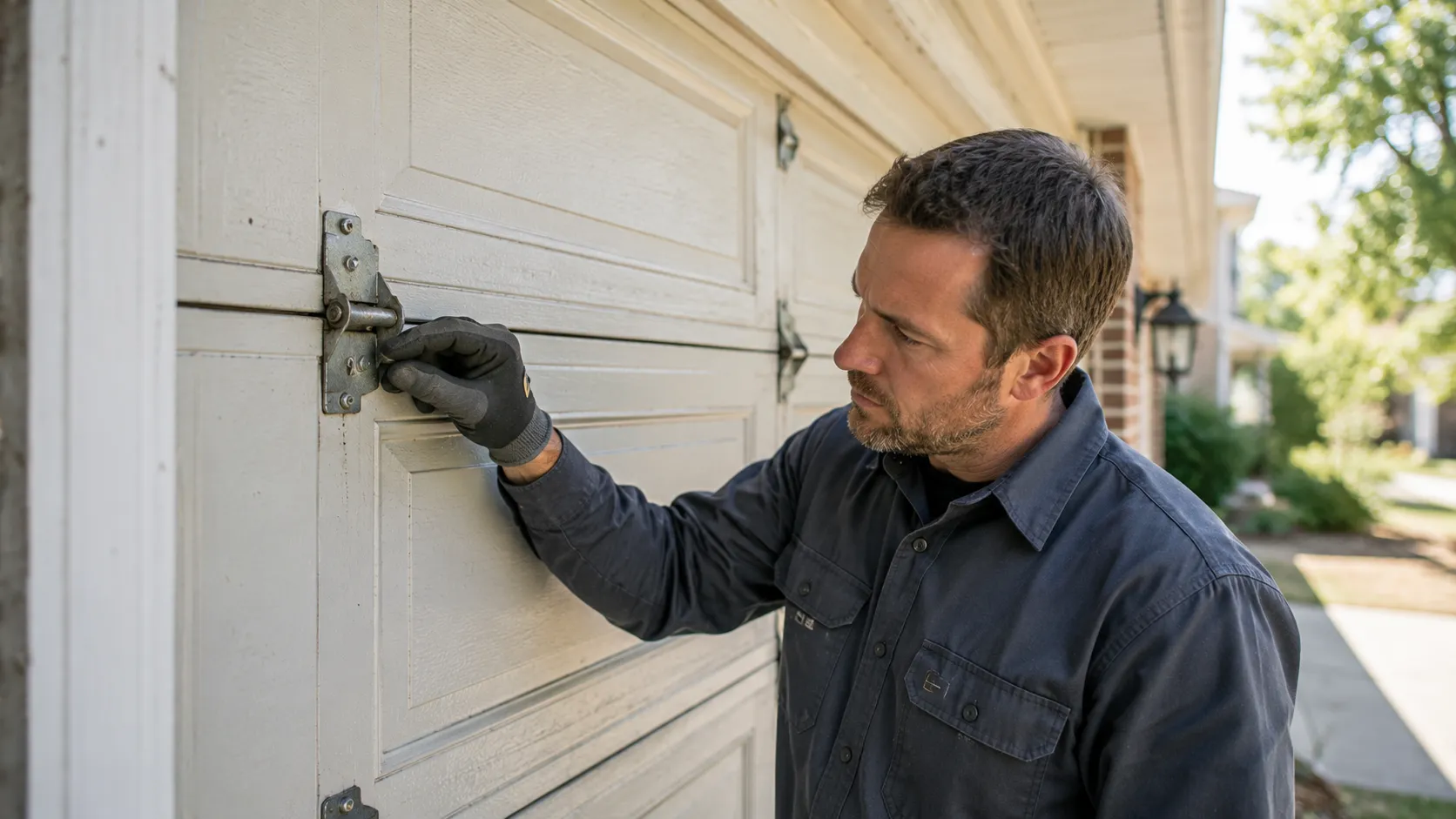
Start at the bottom seal. If you can slide a piece of paper under it in more than one spot, the door isn't sealing, and on an uninsulated panel that gap does more damage than it would on a foam-core one. Next, knock on the middle of a panel with your knuckle. A hollow, tinny sound means single steel skin with nothing behind it - common on the older end of the 1973-2015 range this area was built in. A dull, muted thud means there's a foam core doing its job.
Check the weatherstripping at the sides and top of the frame too. Cracked or brittle stripping lets in more than just draft - it lets in the same heat and glare that bakes the rest of the panel. If your house sits on the older side of that 1973-2015 build window, this is worth checking every season, not just once. Homes from the 2000s-heavy stock that makes up most of this service area tend to already have the double-layer doors, so the check matters more if your street is one of the earlier pockets.
The area
What Is Going On
The service area's housing stock runs from 1973 up through 2015, with the median landing around 2001. Doors installed on the earlier end of that range typically went in before foam-core insulation was standard equipment rather than an upgrade option, so a fair number of original single-skin steel doors are still hanging on torsion hardware that's decades old. That's not a flaw in the house - it's just what was normal when the door went in.
Across the 22 named areas that make up most of this stock, the pattern repeats: a mix of original 1970s-80s doors sitting a few streets away from doors installed during the 2000s building wave, which tend to already have insulated cores. In a neighborhood like Hunters Glen, just over a mile north-northeast, you can find both generations within a short walk of each other. The practical result is that an insulation problem on one door doesn't mean the whole block has it - age of that specific door matters more than the age of the neighborhood.
What we find
The Seasonal Bit
Plano sits in a moderate heat climate band, not the extreme swings you'd get further west or south, but moderate still means real temperature cycling across a year. An uninsulated steel panel expands and contracts with that cycling more than an insulated one does, and over years that movement is what loosens hinges and stretches out the bottom seal faster than the manufacturer's spec sheet assumes.
Spring tension shifts with temperature too. Cold mornings make the metal in an extension or torsion spring slightly stiffer, and on an older uninsulated door that's already working harder against a less sealed opening, that stiffness shows up as a door that groans or hesitates on the first open of the day. It usually loosens up once the day warms - the moderate band here means you don't get the severe cold-snap failures some regions see, but the seasonal creak is still worth noting before it becomes a spring that lets go.
How we work
What the Weather Here Does to It
Moderate heat, applied steadily over years rather than in extremes, is a slow-fatigue problem more than a sudden-failure one. On an uninsulated door, the outer skin heats up during the day and that heat radiates straight through to the garage interior - there's no foam layer to slow it down. Over enough summers, that heat cycling is what causes the visible bowing or oil-canning you sometimes see on older steel panels, especially ones facing direct sun.
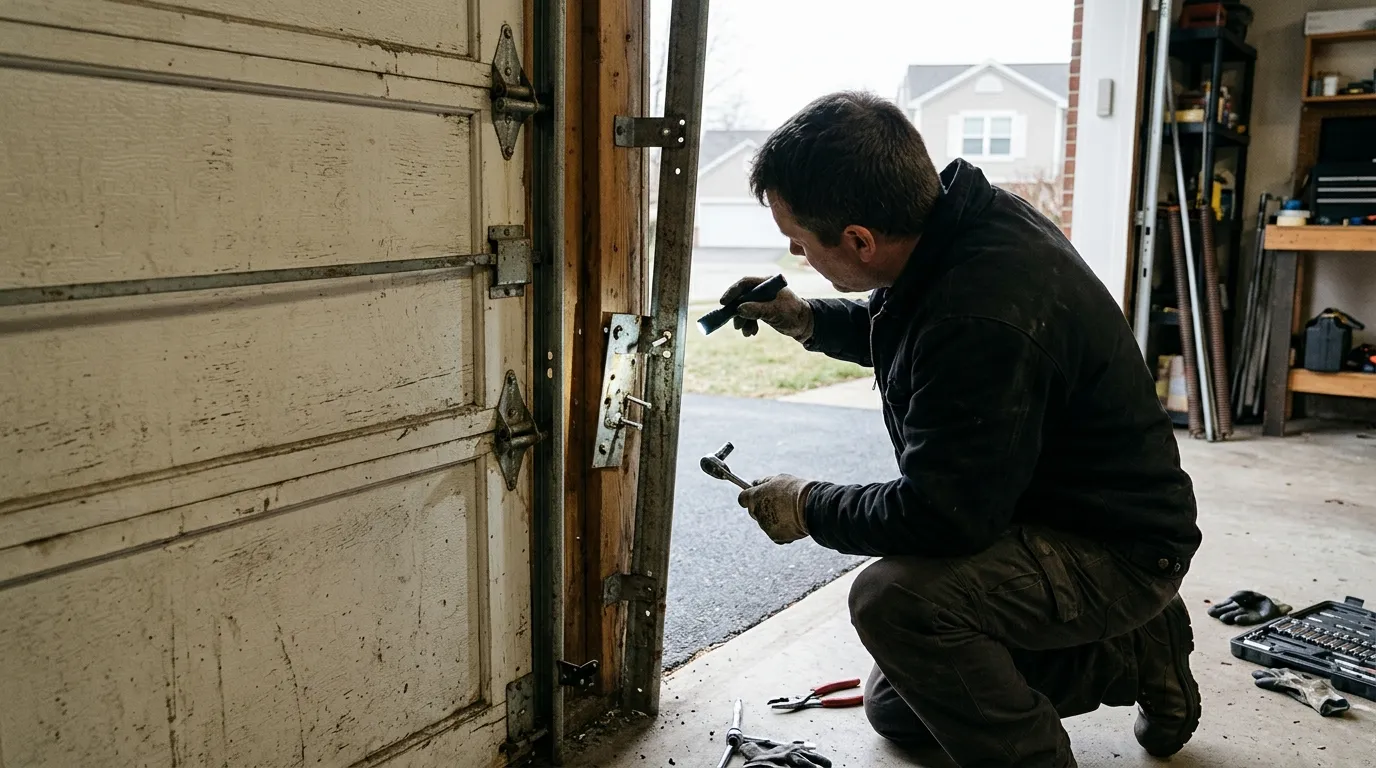
We don't retrofit insulation into a panel that's already warped or delaminating - once the skin has separated from a foam core, or a single-skin panel has bowed, patching insulation into it doesn't fix the shape problem underneath, and at that point replacement is the honest answer rather than another repair. On a straight panel that's just older and drafty, adding weatherstripping and checking the seal is usually enough to buy real years.
Questions
Common questions
How do I know if my garage door has insulation at all?
Knock on the middle of a panel. A hollow, tinny sound means bare steel with nothing behind it - common on older doors from the earlier part of the area's 1973-2015 build range. A dull thud means there's a foam core inside, which is more typical of doors installed during the 2000s building wave that makes up most of this area's stock.
Is it worth insulating an older door instead of replacing it?
If the panel is straight and the hardware is sound, adding weatherstripping and a bottom seal upgrade can meaningfully cut drafts. If the skin has already bowed or separated from cracking with heat cycling over the years, insulation won't fix the shape, and replacement is the more honest call at that point.
Does the heat here actually damage garage doors?
Plano sits in a moderate heat band, so it's not the extreme cycling you'd see in a hotter, drier climate. But moderate heat applied year after year still causes slow fatigue - expansion and contraction that loosens hinges and stretches seals on uninsulated panels faster than it does on insulated ones.
Ready when you are
Need a garage door sorted in Plano?
Plano Garage Door Pros repairs and installs garage doors, springs and openers in Plano, TX and the surrounding area.