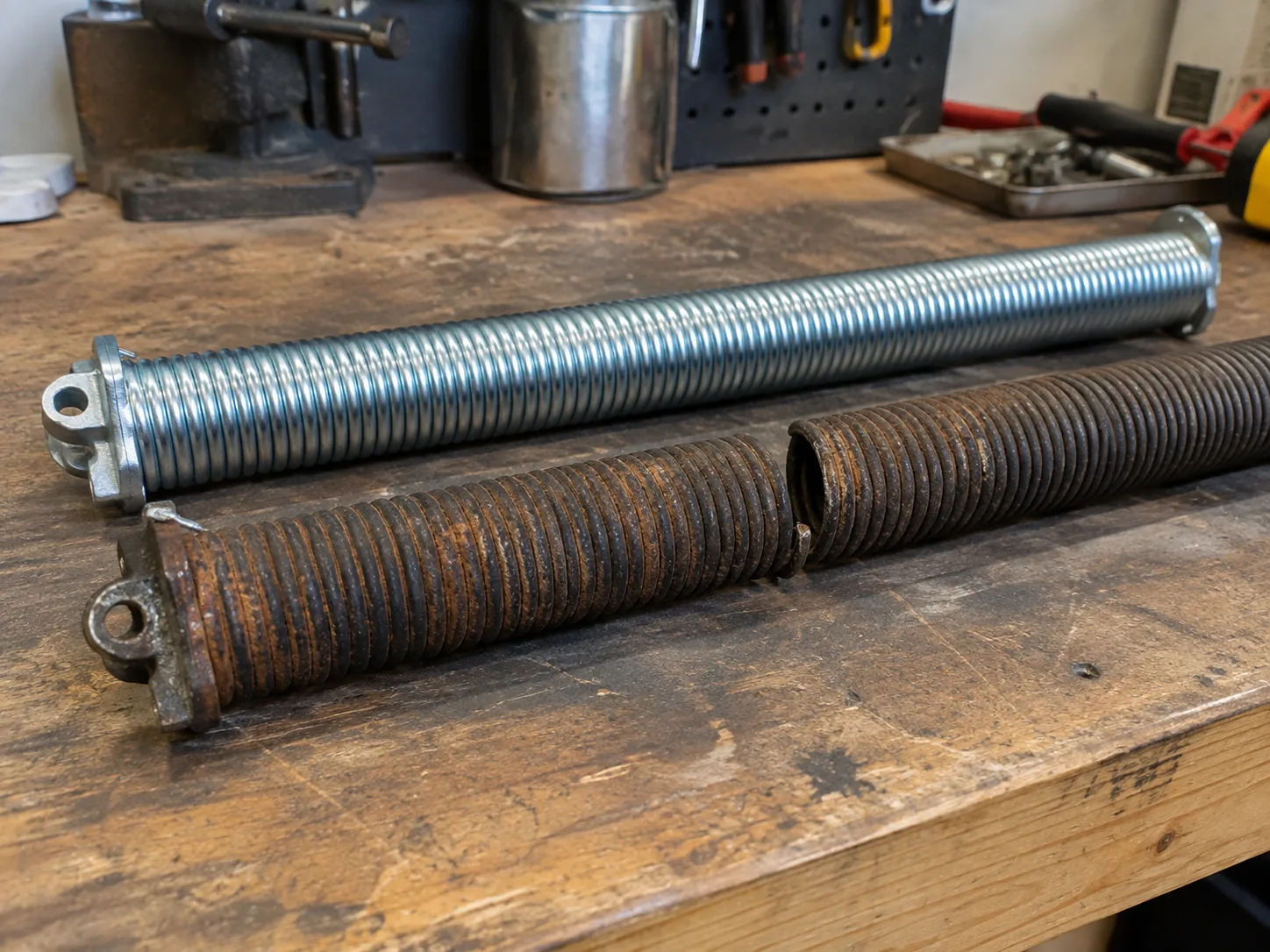
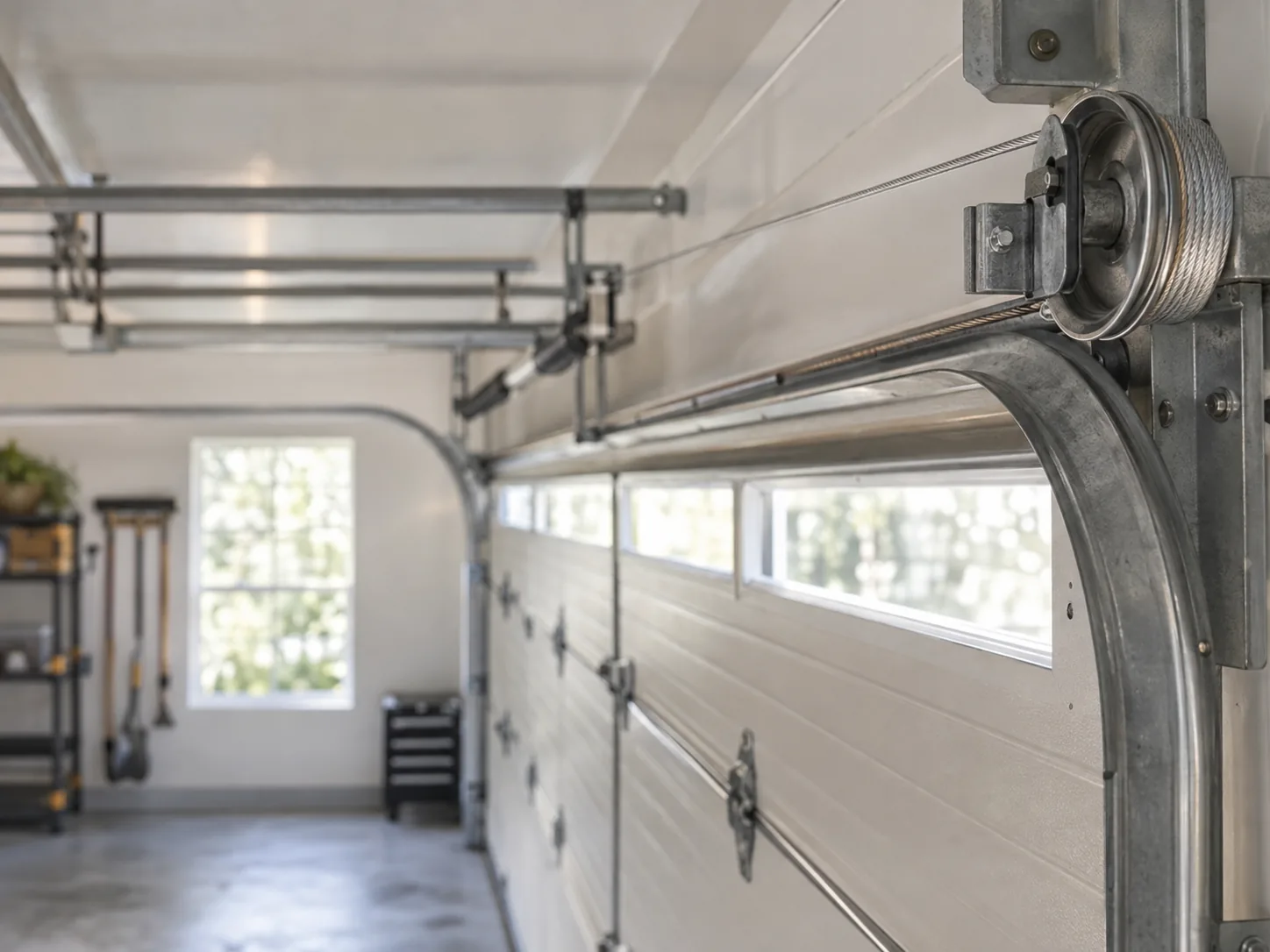
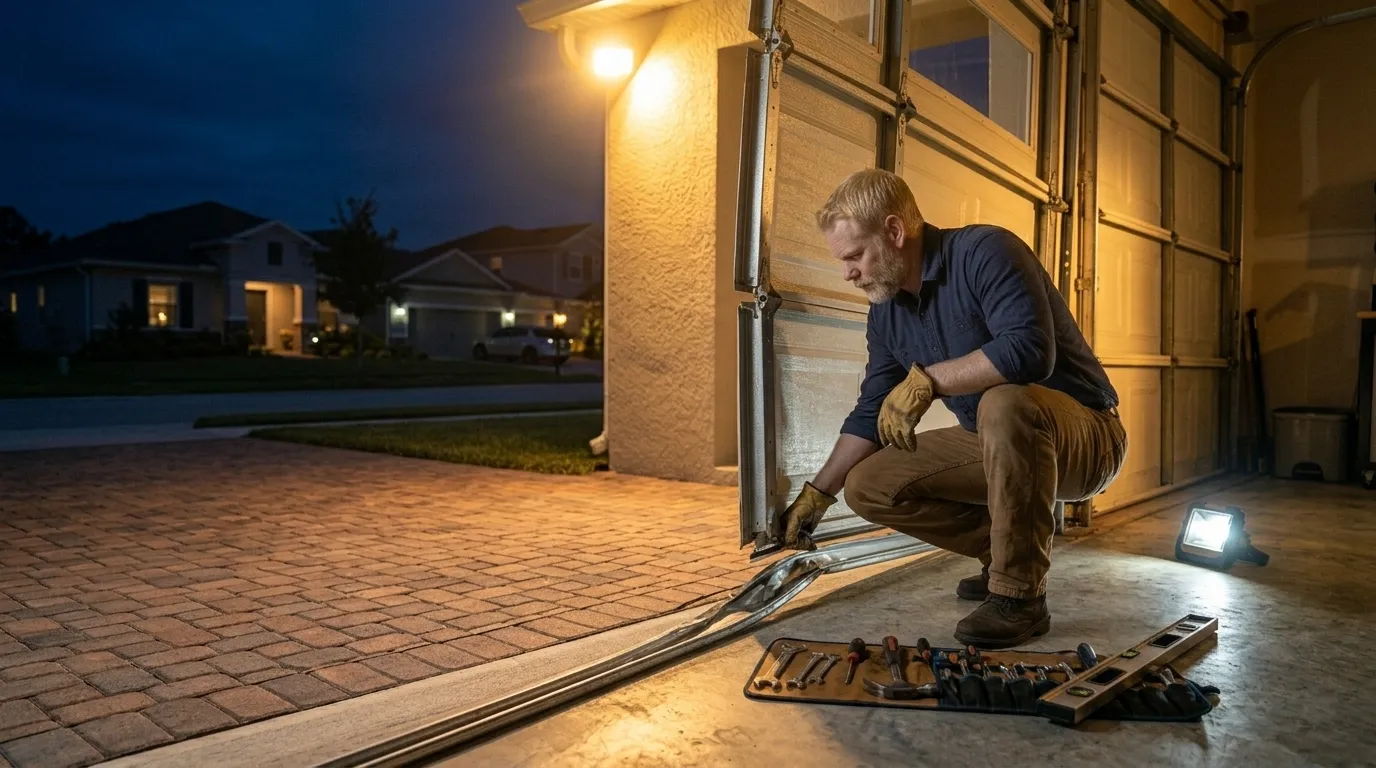
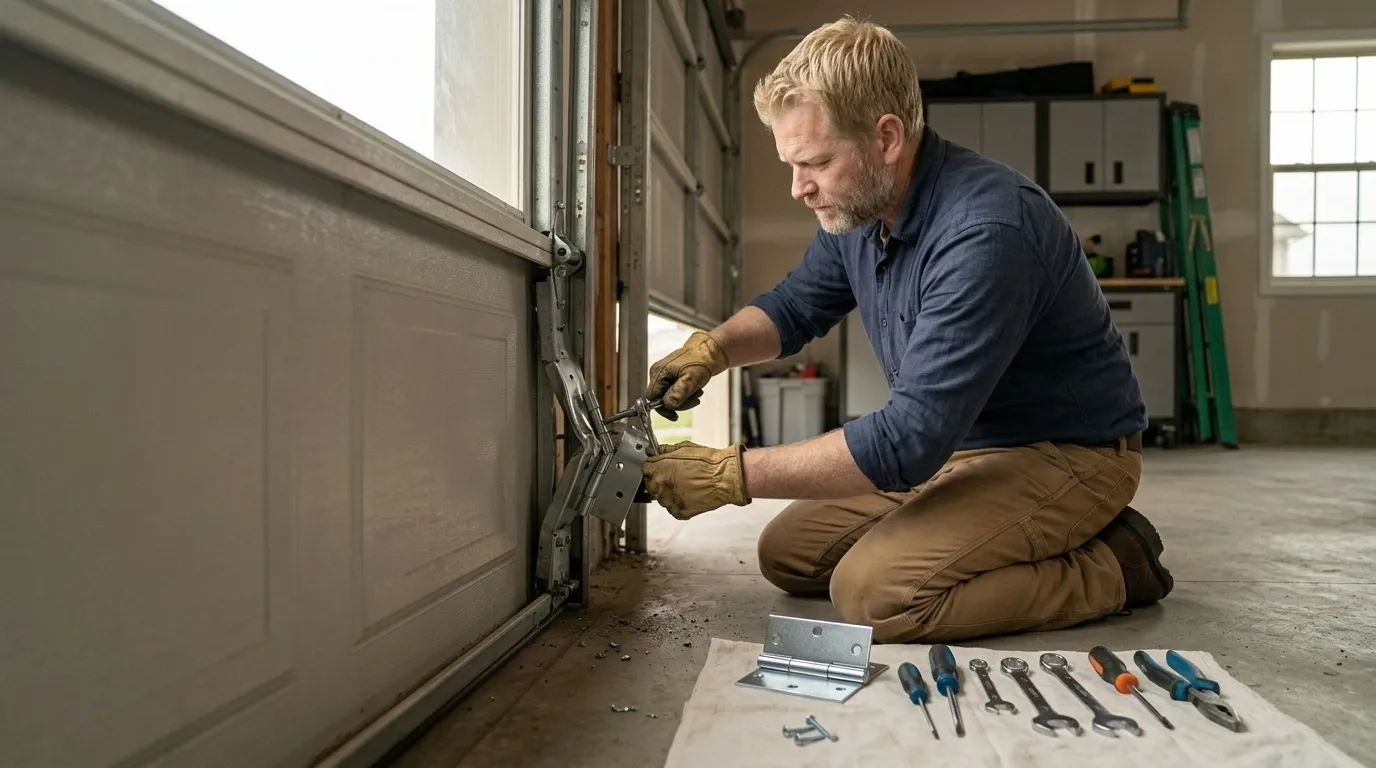
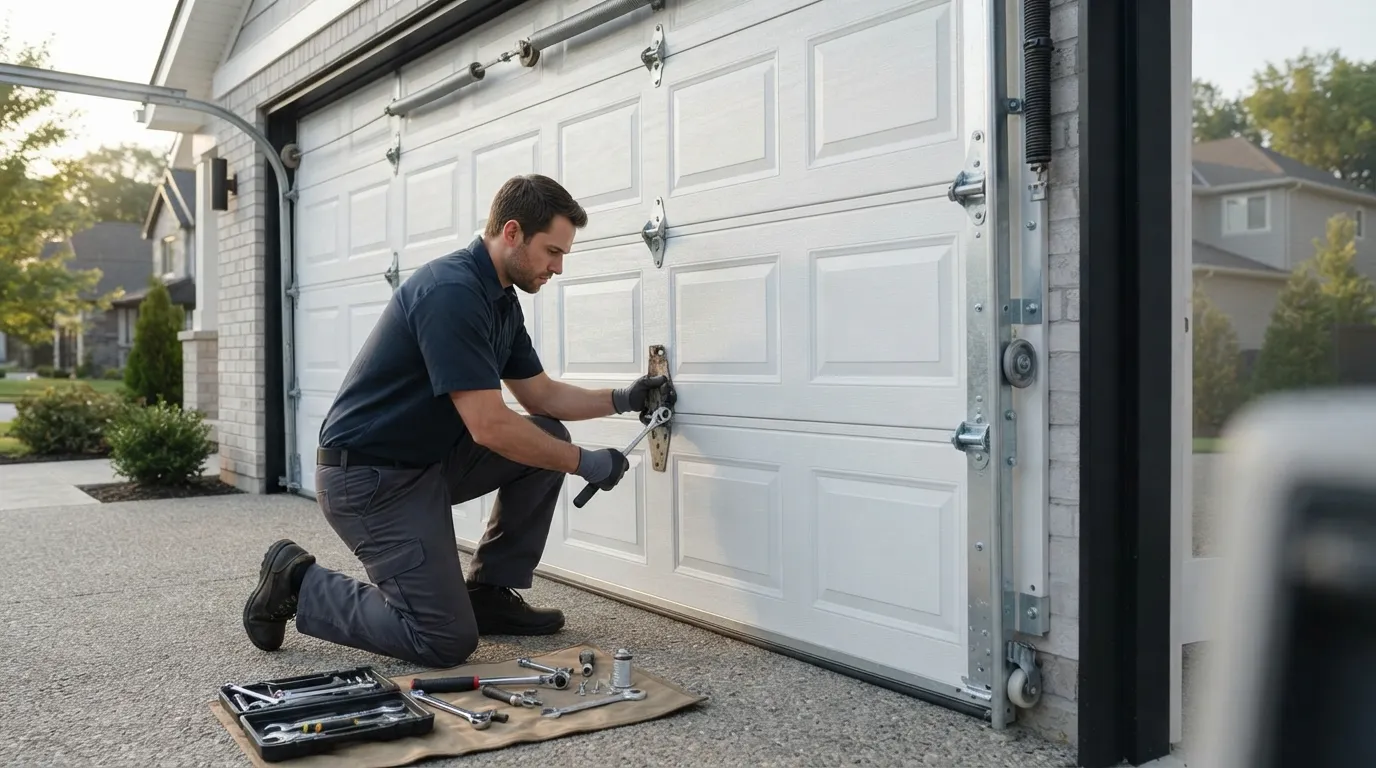
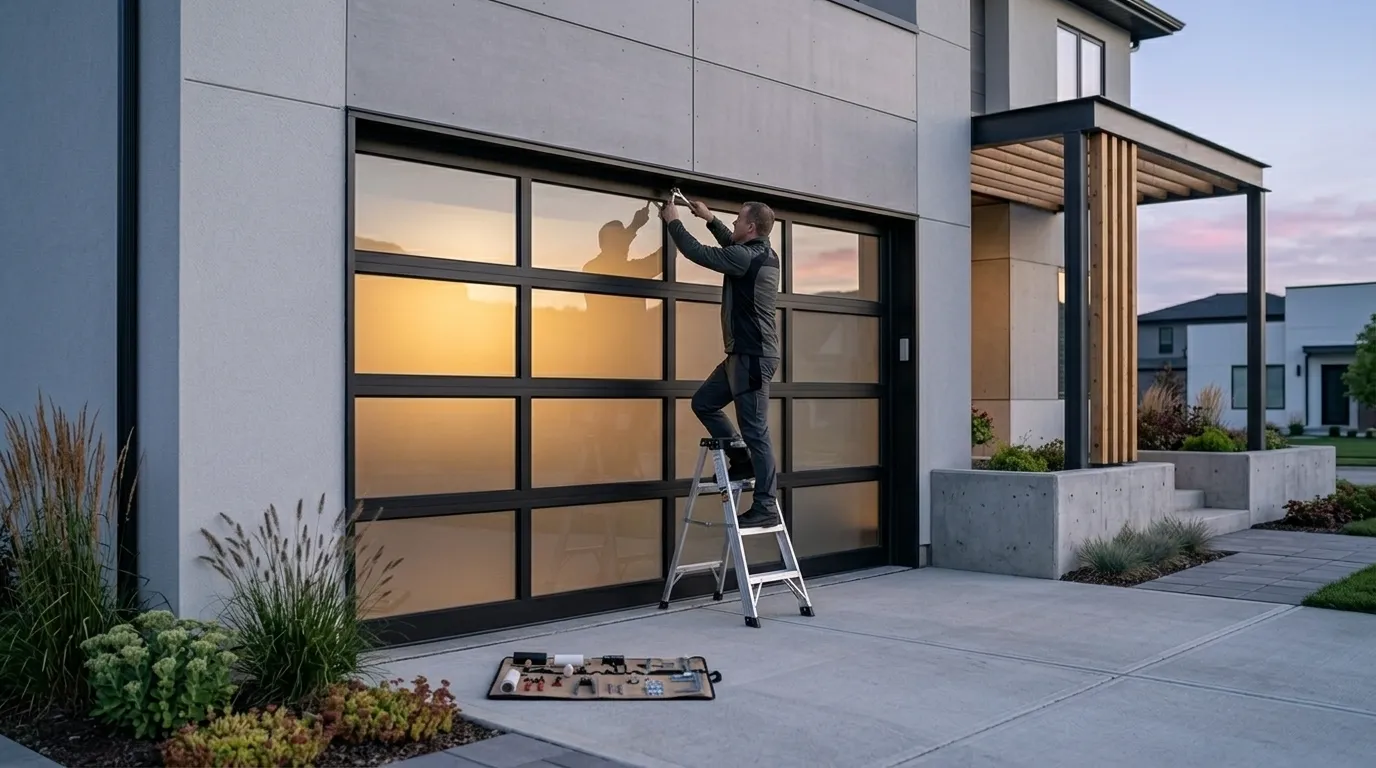
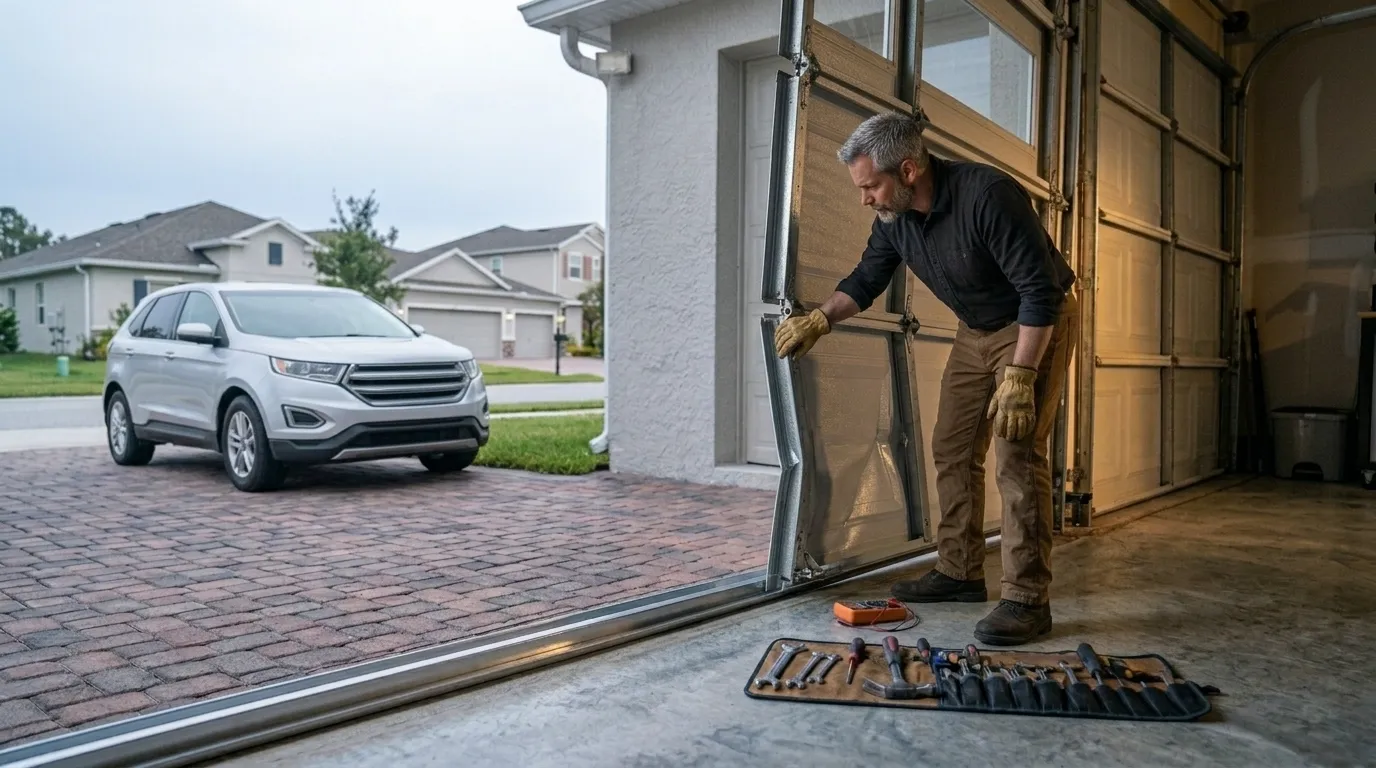
Murphy's housing stock centers on a median build year of 2005, which puts almost every garage door in town on the same generation of hardware: builder-grade torsion springs sized to lift lighter, hollow-core steel panels rather than the heavier wood or insulated doors you'd find in older neighborhoods. That's not a bad thing on its own, but it means the springs installed at construction were sized for a door that hadn't yet picked up 15-20 years of Texas heat cycling on the winding cone and end bearings. When a spring on one of these doors goes, it's usually a single 2000s-spec torsion spring reaching the end of its rated cycle count, not a mismatched or oversized replacement someone bolted on later. The moderate heat band this area sits in doesn't crack springs the way a harsh freeze-thaw climate would, but it does dry out the lubrication faster than owners expect, so the failure often looks sudden even though the spring's been winding down for months. Because most of Murphy went up in the same decade, we see the same failure pattern house after house here: one spring snaps clean, the door won't budge past a few inches, and the opener strains against a full deadweight it was never built to lift alone.