Checking It Yourself
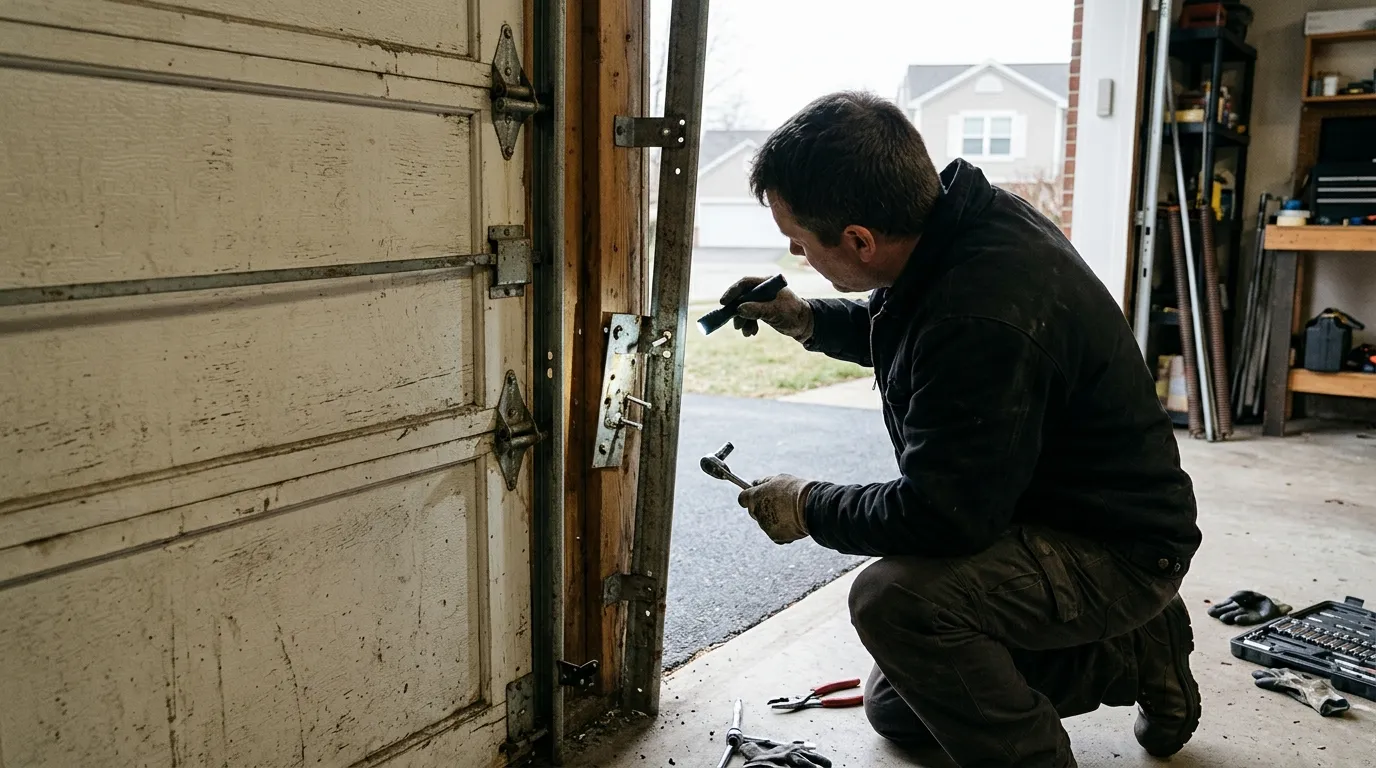
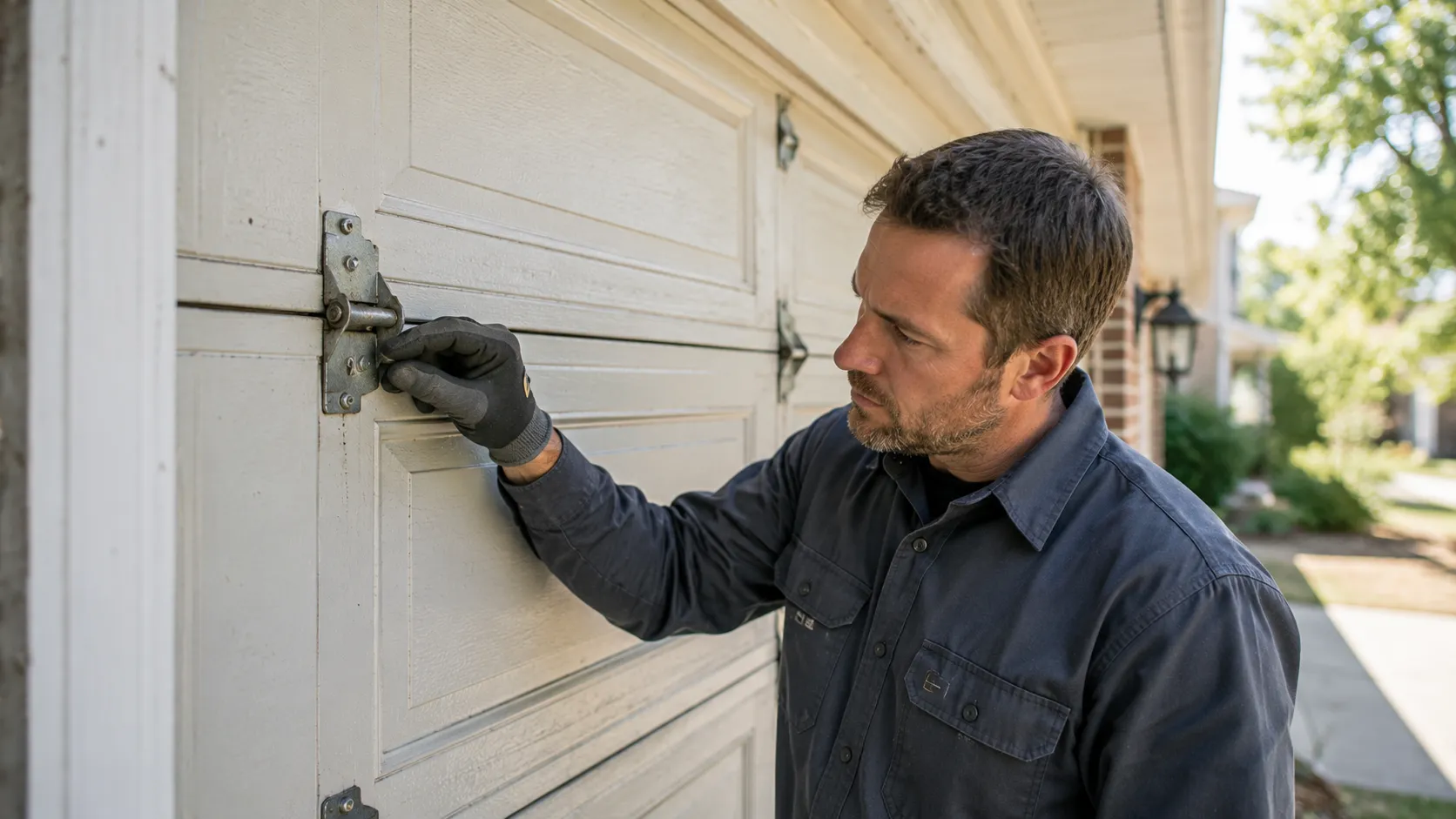
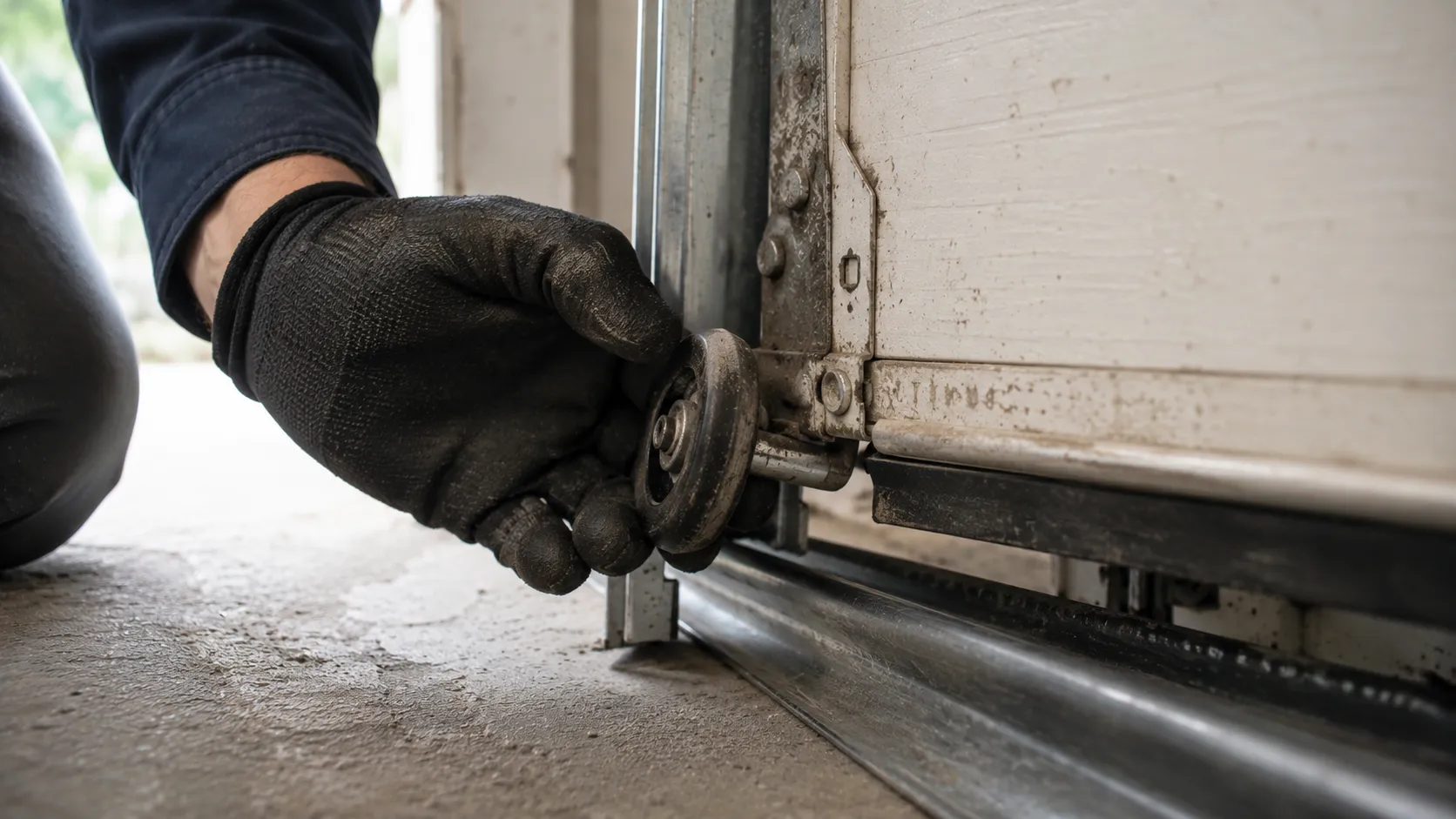
Before you call anyone, there are a few things worth a look. Pull the emergency release and see if the door moves smoothly by hand - if it binds or drops fast, that's a spring problem, not an opener problem, and it's not a DIY fix. Check the tracks for dents or gaps where the rollers sit. Listen to the opener: grinding usually means the gear inside the unit is worn, not the door itself.
Most houses in this service area were built between 1973 and 2015, with the median landing around 2001, so what you're looking at is almost always 2000s-era sectional steel doors on torsion spring hardware, not the older one-piece slab doors you'd find in a much older town. That matters because parts availability and failure points differ a lot by era.
Here's the honest limit: if you're not sure whether what you're hearing is the spring, the opener, or the track, don't guess by pulling on anything under tension. A service call exists precisely because torsion springs store enough force to cause real injury, and that's not a place to save a truck roll.
What Is Going On
A service call in this area almost always starts the same way: we're diagnosing hardware that's between 10 and 50 years old, most of it clustered in that 2000s build window that dominates the local stock. That means galvanized torsion springs rated for a specific door weight, steel tracks bolted to wood jambs from that era, and chain or belt-drive openers that were mid-range when installed and are now due for a board or a drive replacement.
Across the roughly 22 named subdivisions and pockets that make up this service area, the hardware doesn't vary much - a door built in 2003 in one neighborhood is close kin to a door built in 2005 across town. That consistency is actually useful: it means we're rarely guessing at parts compatibility, because we've seen the same torsion spring wind pattern and the same opener chassis dozens of times over.
What we won't do is replace an opener when the actual issue is a $40 sensor alignment, or sell a full spring set when one side failed and the other still has life in it. A service call is a diagnosis first - you get told what's actually wrong before anything gets swapped.
The Seasonal Bit
Plano sits in a moderate-heat climate band, and that shapes what breaks and when. There's no deep freeze cycle here working springs open and shut through repeated contraction, so the seasonal pattern is heat-driven instead. Lubricant on rollers and hinges cooks off faster in sustained heat, springs run slightly looser in warmer months and slightly tighter in cooler ones, and openers with older logic boards can get flaky when the garage itself holds heat all afternoon.
The result is a service call pattern that peaks less around a hard cold snap and more around stretches of sustained heat, when doors that were already marginal start showing it - a spring that was one winter away from snapping goes ahead and does it in July instead. Openers with sun-exposed control boxes or garages that trap heat also see more sensor and logic-board calls during the hottest stretch of the year.
We don't stock every belt-drive gear kit for every opener made in the last two decades - some parts have a lead time of a few days if the unit is older or less common. That's worth knowing before you assume same-day means same-part.
What the Weather Here Does to It
Without a freeze-thaw cycle to worry about, the wear we see on doors in this service area is almost entirely thermal - sun and heat working on steel, rubber, and lubricant rather than ice working on seals and springs. Door panels facing west or south can warp slightly over years of direct afternoon sun, which shows up as a door that binds only in the top or bottom section of track, not the whole run.
Weatherstripping at the bottom of the door dries and cracks under UV exposure faster here than it would in a shadier or colder climate, and that's a cheap fix that gets ignored until it's letting in heat and dust. Torsion springs, being steel under constant tension, actually run a touch looser in sustained high heat, which can throw off the balance point on a door that seemed fine all winter.
We don't recommend re-tensioning springs seasonally as routine maintenance - it's not necessary for most of this hardware, and doing it without a reason just adds wear. A service call checks balance and lubrication, tells you honestly if anything needs adjusting, and leaves alone what doesn't.
Talk to a local pro
Garage door trouble in Plano?
Same-day service with honest, upfront quotes.