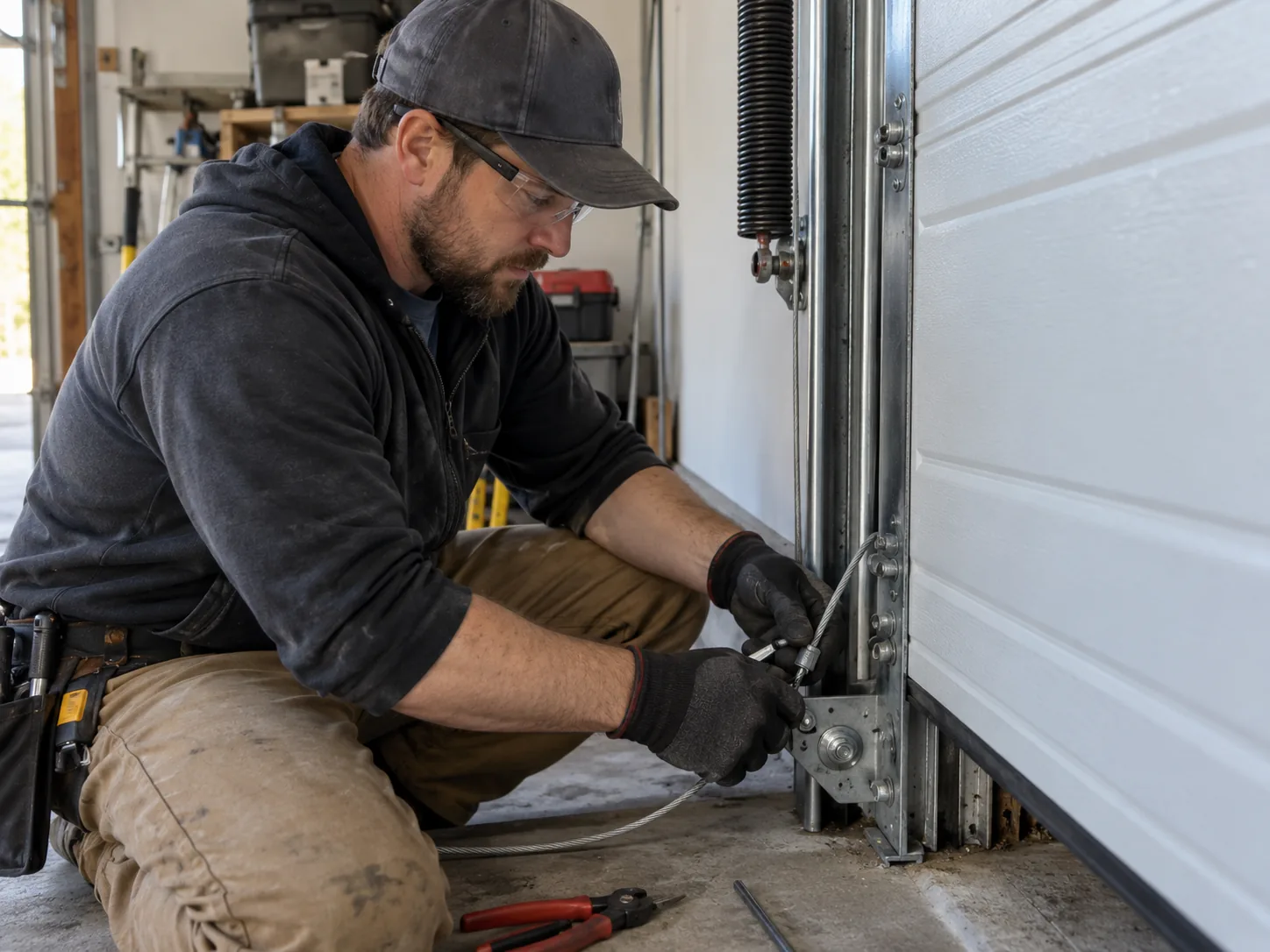
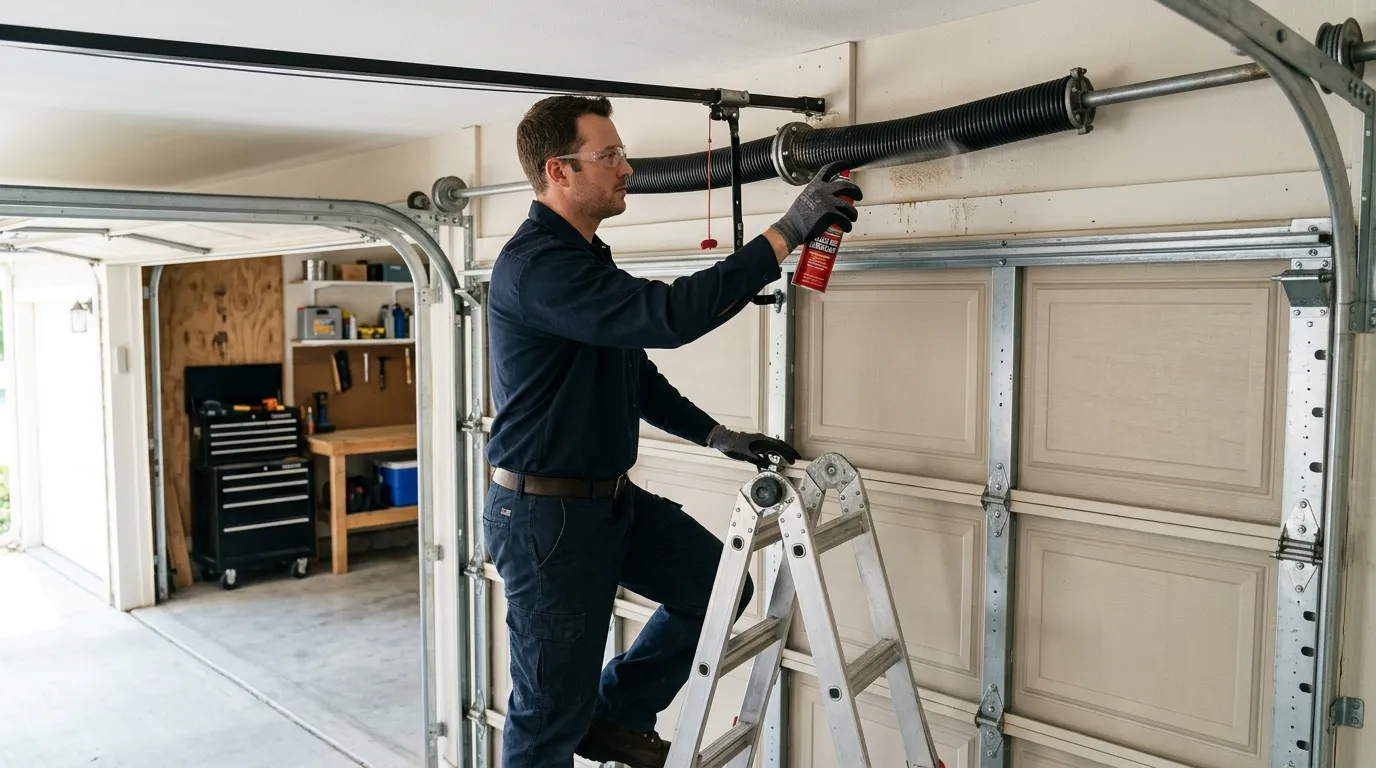
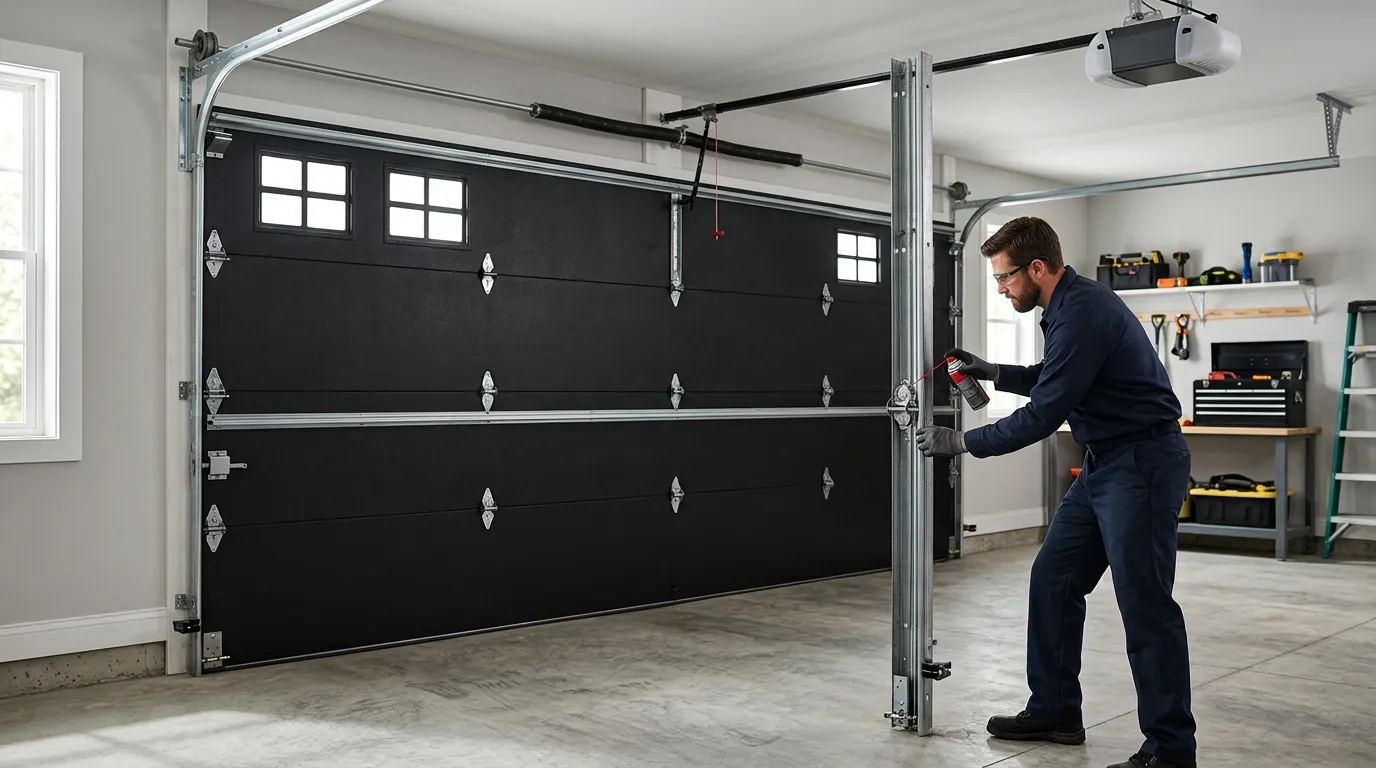
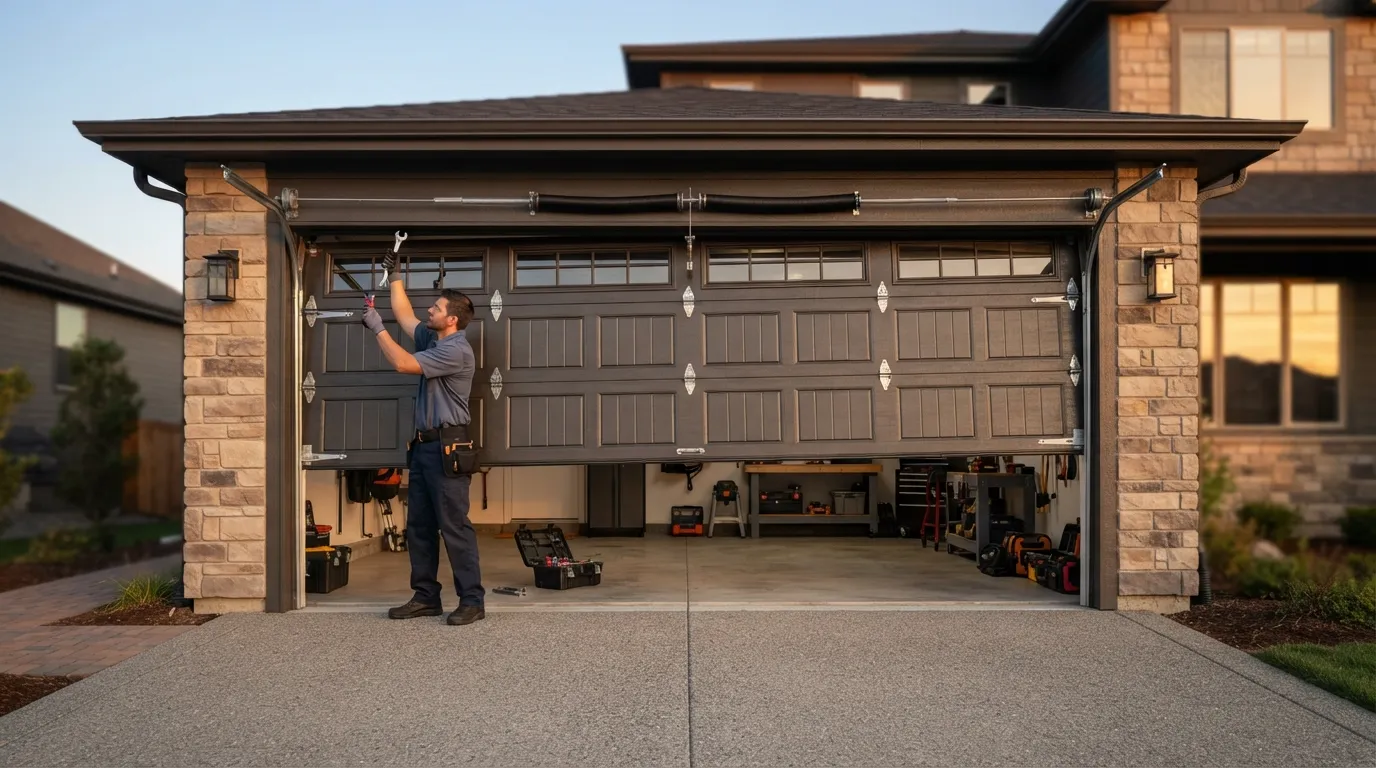
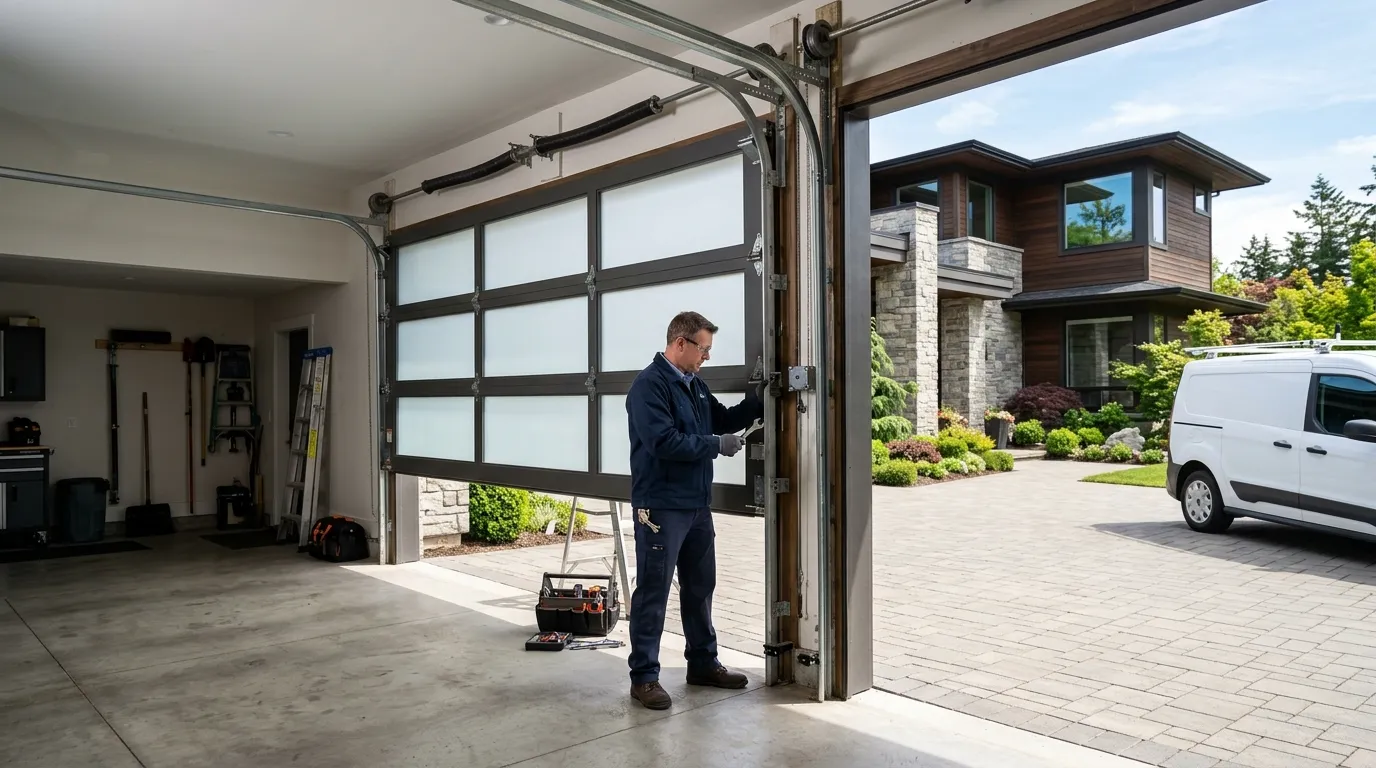
Most of the housing stock across this service area went up between 1973 and 2015, with the median build year sitting around 2001. That matters for cables because a house built in that window almost always shipped with steel lift cables on a torsion or extension spring system, and those cables have a working life measured in years, not decades. A door installed when the neighborhood was new is now old enough that the factory cable has seen 15 to 25 years of cycling, and cable doesn't fail gracefully - it frays strand by strand until one thread lets go under load.
The climate here is moderate heat, not the freeze-thaw cycling that snaps cable insulation in colder states, but summer heat still dries out the galvanized coating over time and lets surface rust start at the drum end, where the cable wraps and unwraps thousands of times a year. Across the 22 named areas that make up this market, the mix skews toward 2000s-era construction, so the failure pattern is consistent: original cable, original drum, now past its service window. It's not a design flaw. It's just a wear part reaching the end of its run at roughly the same time across a lot of houses built in the same decade.