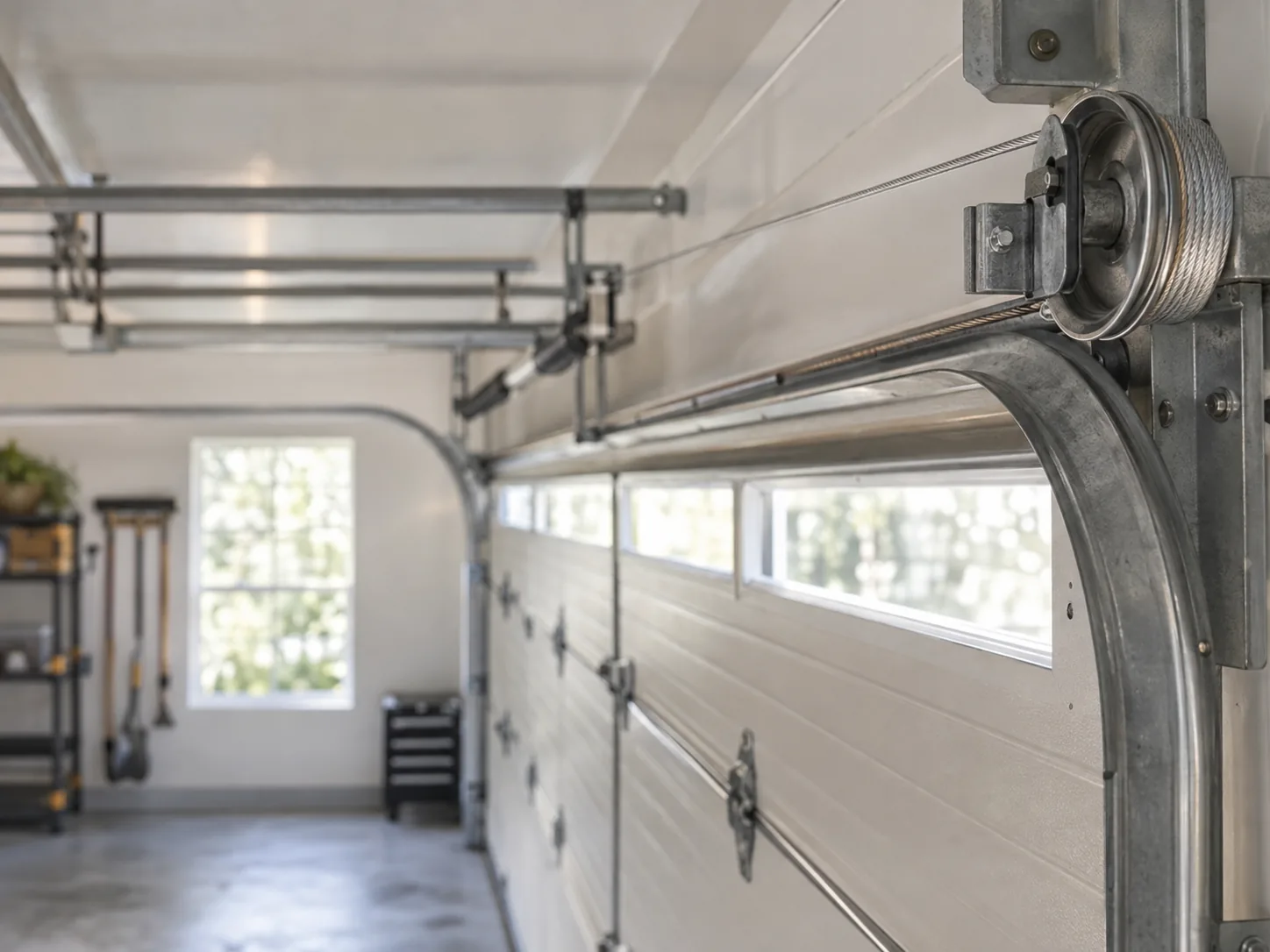
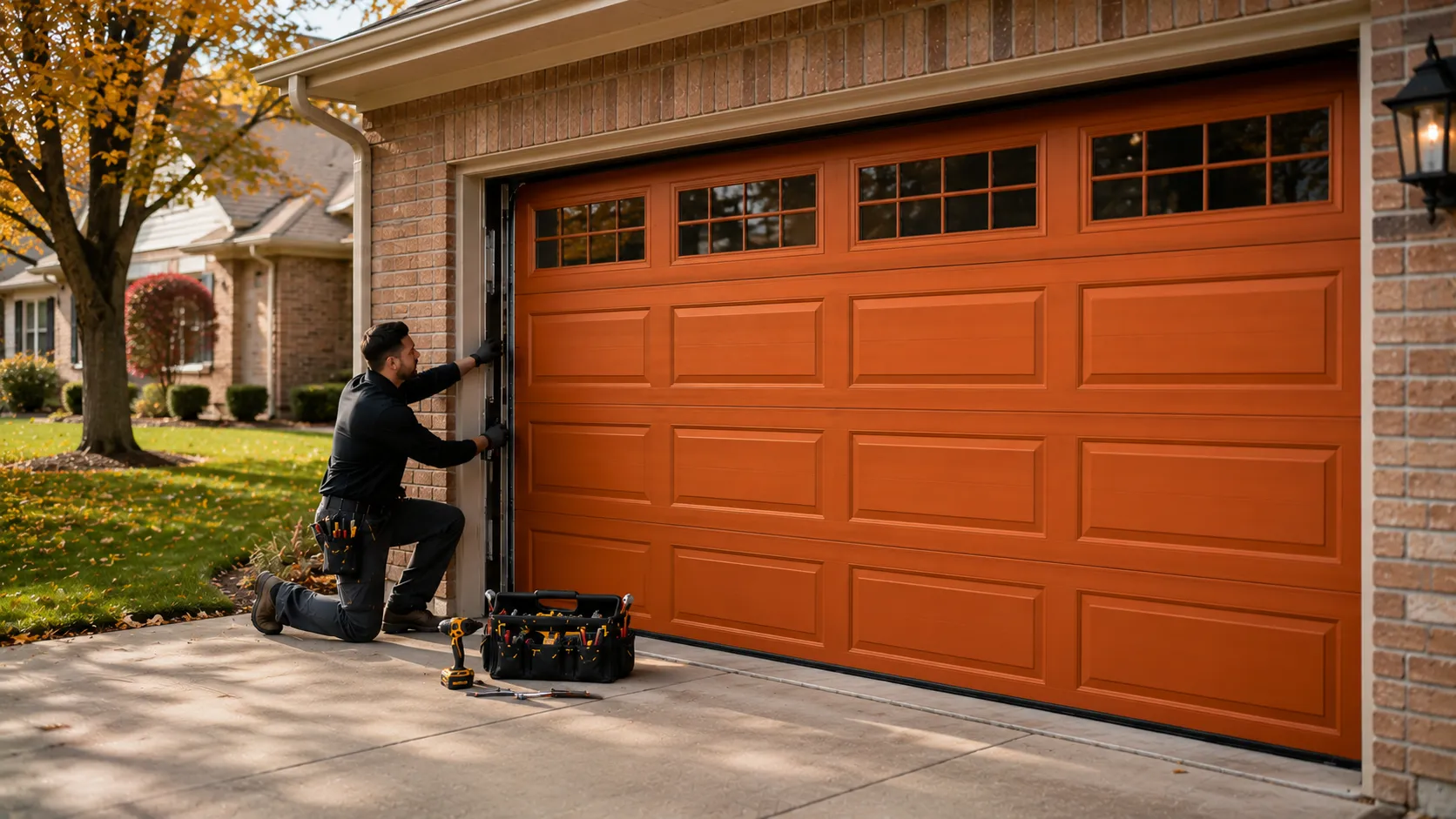
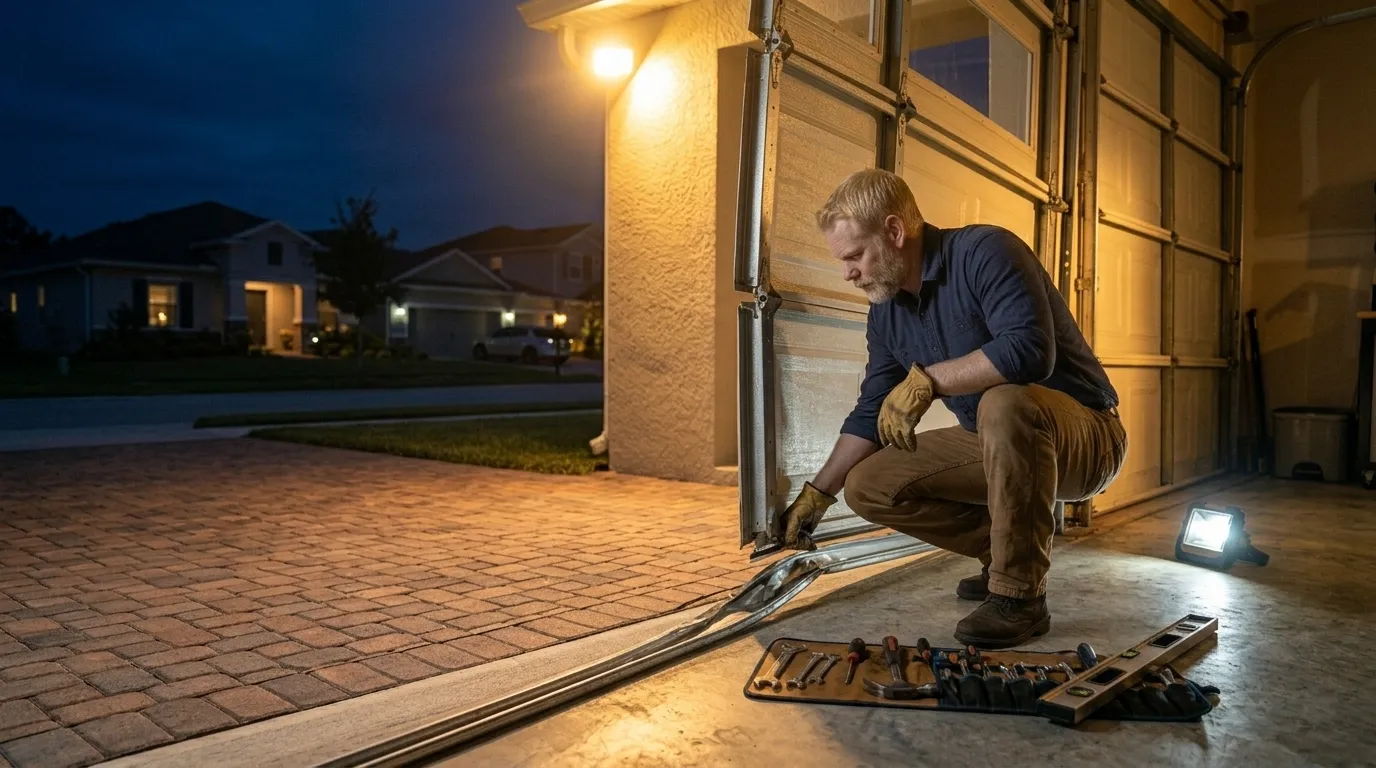
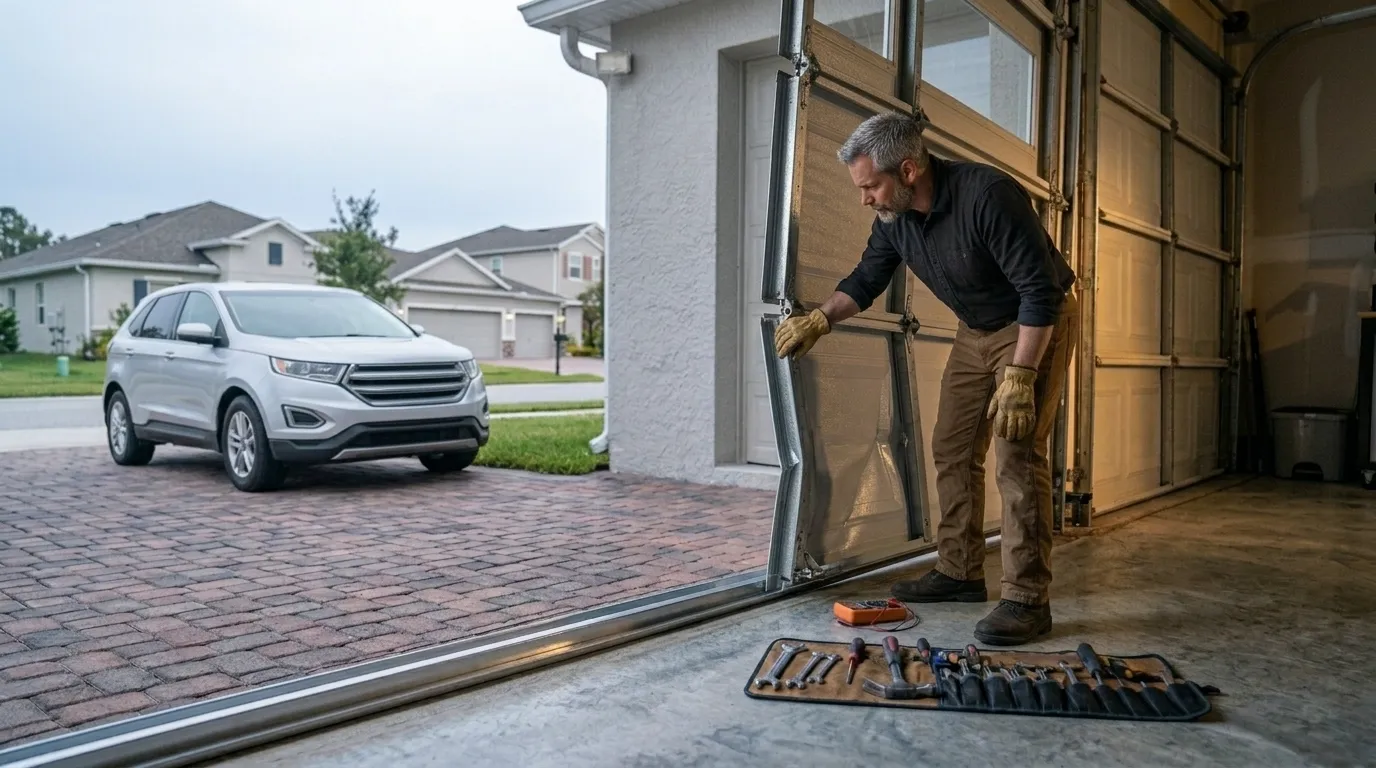
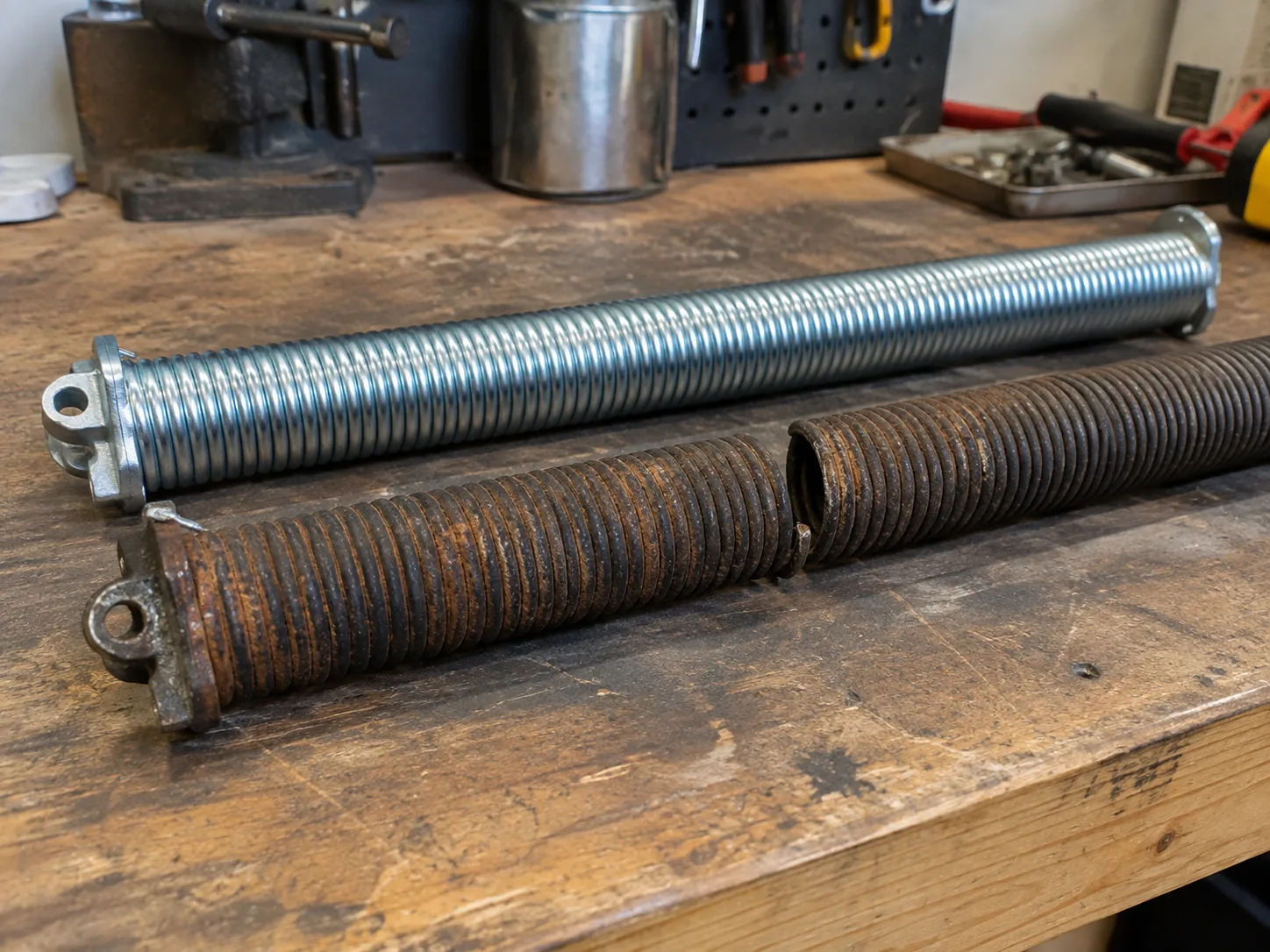
Murphy's houses mostly went up around 2005, a few years newer than the 2001 median that covers the rest of our service area. That gap matters more than it sounds. Builders working after 2000 almost all put in torsion-spring systems with cables that wind onto a drum at each end of the spring shaft, not the older extension-spring setups where the cable runs along the track to a pulley near the top. Torsion cable failure shows up differently: the door drops crooked, hangs at an angle, or one side binds in the track while the other side moves free. That's the drum losing its grip on a frayed or snapped cable, not a spring giving out.
With about 5,907 households in Murphy, that's a smaller slice of the roughly 78,389 households across the whole area we cover, but the age of the stock is the more useful number for this particular repair. Homes built in that early-2000s wave came standard with steel torsion hardware sized for heavier insulated doors, and the cables on those systems carry more load per strand than what you'd find on an older extension setup. When one frays at the drum or at the bottom fixture, it goes quickly and takes the balance of the door with it.